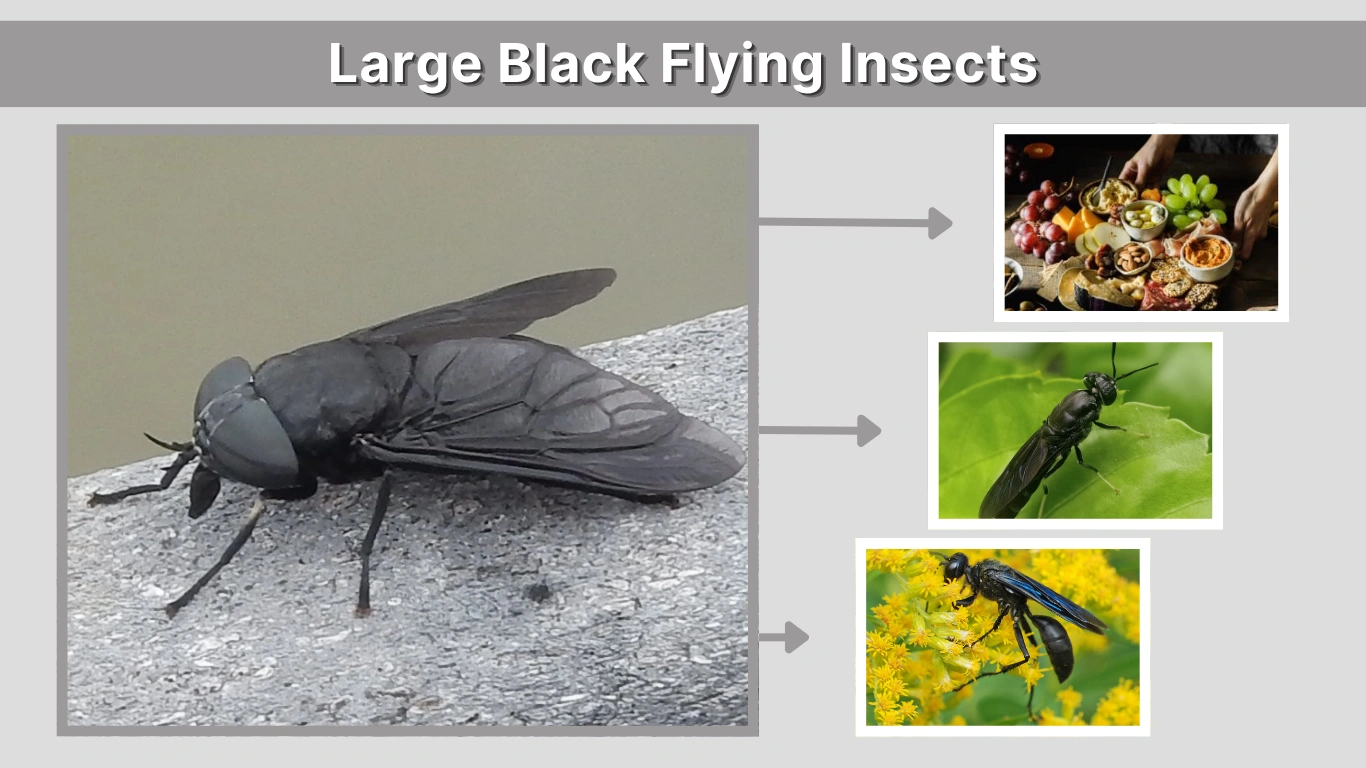
Large black flying insects are common across many parts of the world and can appear intimidating due to their size, noise, and speed. While some are harmless pollinators, others can bite or sting when threatened. Identifying them correctly helps determine whether they pose a risk or play a beneficial ecological role. Their size, color patterns, and behavior vary depending on the species and environment.
Identification of Large Black Flying Insects

General Appearance
Large black flying insects typically range between 1 to 2 inches long and have sturdy bodies, transparent or tinted wings, and loud, fast wingbeats. Their coloring can be entirely black or accented with yellow, orange, red, white, or blue markings, depending on the species. Some are hairy like bees, while others have smooth, shiny exoskeletons similar to wasps.
Key Features to Observe
- Buzzing sound: Deep and loud in species like carpenter bees and hornets.
- Hair or fuzz: Indicates pollinators such as bees.
- Smooth body and narrow waist: Typical of wasps and hornets.
- Bright stripes or spots: Serve as warning colors to predators.
- Wing color: Ranges from metallic blue and orange to transparent white.
Common Behavior
- Hovering near wood structures: Usually carpenter bees.
- Flying low over grass: Often beetles or horseflies.
- Active near flowers: Pollinators like wasps and bees.
- Nesting under eaves or in tree cavities: Hornets or wasps.
Common Types of Large Black Flying Insects

Carpenter Bees
These large black buzzing insects are often mistaken for bumblebees but have shiny abdomens. They bore round holes into wooden surfaces such as fences or decks to create nests. Found in Texas, Georgia, and the U.K., they are harmless unless handled roughly.
Bald-Faced Hornets
Recognizable by their black-and-white striped bodies, bald-faced hornets are actually a type of yellowjacket. They build papery nests in trees or under eaves. Highly territorial, they can sting multiple times and are common in North America, including New York and Massachusetts.
Great Black Wasps
These sleek, black wasps with metallic-blue wings are solitary and non-aggressive. They prey on grasshoppers and caterpillars, helping control pest populations naturally. Found in California, Arizona, and the Carolinas, they are often spotted visiting flowers.
Horseflies and Black Flies
Large black horseflies have prominent eyes and short antennae. Females bite humans and animals to feed on blood, leaving painful welts. They are most common in humid southern states like Florida, Texas, and Georgia.
Asian Giant Hornets
Also known as “murder hornets,” these large black and orange flying insects originate from Asia and have powerful stings. Though rare in the U.S. and Europe, they appear in some regions due to climate shifts. Their orange heads and black-striped abdomens make them easy to recognize.
Color Variations of Large Black Flying Insects

Large Black and Yellow Flying Insects
This group includes wasps, hornets, and bees, characterized by bright yellow striping on black bodies. They are common in Texas, the U.K., and Australia, and their colors warn predators of their defensive sting.
Large Black and White Flying Insects
Species such as bald-faced hornets and certain moths exhibit white patches on black bodies. Found in Utah, New York, and Colorado, they build aerial nests and are active from late spring to early autumn.
Large Black and Red Flying Insects
These include fire-colored wasps and soldier beetles. Their striking red markings indicate toxicity or venom. They are often seen in Spain, France, and the southern U.S. during warmer months.
Large Black and Orange Flying Insects
Tarantula hawk wasps and orange-winged black wasps fit this category. Common in Australia, the Dominican Republic, and southern Europe, they look fierce but are typically solitary and non-aggressive unless threatened.
Large Black and Blue Flying Insects
Insects such as the great black wasp and blue mud dauber display metallic blue or violet wings. Found across California, North Carolina, and Arizona, these wasps are beneficial predators that feed on spiders and caterpillars.
Regional Sightings and Habitats
United States
- Texas & Florida: Carpenter bees, hornets, and horseflies dominate warm climates.
- California & Arizona: Great black wasps and blue-winged mud daubers thrive in arid conditions.
- Midwest (Ohio, Michigan, Minnesota): Large hornets and beetles are active in summer.
- Northeast (New York, Pennsylvania, Massachusetts): Bald-faced hornets and black wasps common near wooded or suburban areas.
United Kingdom and Europe
In the U.K., large black and yellow wasps and bumblebees are most common from late spring to autumn. In southern Europe—including Spain, Italy, Greece, and Portugal—warm climates attract black and orange wasps and carpenter bees near flowering plants.
Australia and Other Regions
Australia is home to giant black wasps and metallic blue bees, especially in coastal or semi-arid regions. Similar species appear in the Dominican Republic and Turkey, where tropical conditions support large pollinator populations.
Behavior and Stinging Risk

Non-Aggressive Species
Many large black flying insects may look dangerous but are harmless. Carpenter bees, blue mud daubers, and soldier flies rarely sting and prefer to avoid human interaction. They spend most of their time pollinating flowers or hunting smaller insects. These species are essential pollinators and beneficial to gardens.
Aggressive or Defensive Species
Hornets, wasps, and yellowjackets are the most defensive among large black flying insects. They will sting if they feel their nest is threatened. Their stings are painful and can cause allergic reactions in sensitive individuals. Unlike bees, wasps and hornets can sting multiple times. It’s best to stay calm and avoid sudden movements if one hovers nearby.
Biting Flies
Horseflies and black flies are strong fliers that can bite through skin to feed on blood. Their bites leave red, itchy welts that can become irritated. These insects are most active in warm, humid conditions, especially around lakes and marshes.
Control and Prevention

Outdoor Management
- Remove attractants: Clean up fallen fruits, sugary spills, and pet food outdoors.
- Seal wooden structures: Prevent carpenter bee nesting by painting or sealing exposed wood.
- Trim vegetation: Keep shrubs and tree branches trimmed to reduce nesting sites.
- Avoid bright colors and fragrances: Strong scents and bright clothing can attract wasps and bees.
Safe Nest Removal
If you spot a hornet or wasp nest near your home, avoid disturbing it during the day. These insects are most aggressive when active. For safe removal:
- Call a licensed pest control service if the nest is large or close to human activity.
- If DIY treatment is necessary, spray the nest at night using protective clothing and a long-range insecticide specifically for stinging insects.
Indoor Prevention
- Install fine-mesh window screens to keep insects from entering.
- Check attics and vents regularly for nests.
- Cover garbage bins tightly and remove decaying food immediately.
- Use yellow-tinted outdoor bulbs, as they attract fewer insects at night.
Natural Repellents
Several household remedies can deter large flying insects naturally:
- Peppermint oil spray: Mix 10 drops with water and spray around entry points.
- Vinegar and citrus mix: Repels wasps and flies effectively.
- Clove and lemongrass oils: Create a scent barrier near porches or windows.
Ecological Importance of Large Black Flying Insects
Despite their sometimes fearsome appearance, many of these insects are vital to ecosystems. Bees, wasps, and hoverflies help pollinate plants, including food crops. Predatory wasps and dragonflies naturally control pest populations by feeding on mosquitoes and caterpillars.
The black soldier fly stands out for its environmental benefits—its larvae recycle organic waste and are processed into protein powder for human and animal consumption. This sustainable protein source reduces the need for traditional livestock farming and helps minimize food waste.
Even the less popular species, like hornets, contribute by maintaining natural balance through predation. Removing them indiscriminately can disrupt local ecosystems.
FAQs
What are the large black flying insects around my house?
They are most likely carpenter bees, wasps, or hornets. Carpenter bees hover near wooden structures, while wasps and hornets patrol open spaces or build nests in eaves and trees. Observing their size, shape, and flight pattern helps with identification.
Are large black flying insects dangerous?
Most are not dangerous unless provoked. Carpenter bees and great black wasps rarely sting, while hornets and yellowjackets can be aggressive if their nests are disturbed. Always keep a safe distance from active nests.
What are the large black and yellow flying insects?
These are typically wasps or hornets, known for their warning coloration and strong stings. They play an important role as pollinators and natural pest controllers but should not be handled or provoked.
What large black flying insects are common in Texas and Florida?
In Texas and Florida, you’ll find carpenter bees, bald-faced hornets, horseflies, and great black wasps. These thrive in warm, humid climates and are especially active in late spring and summer.
How can I get rid of large black flying insects safely?
Keep outdoor areas clean, eliminate standing water, and seal wooden surfaces. Use natural repellents like peppermint or clove oil for deterrence. For stinging insects, seek professional pest control if nests are large or near entryways.