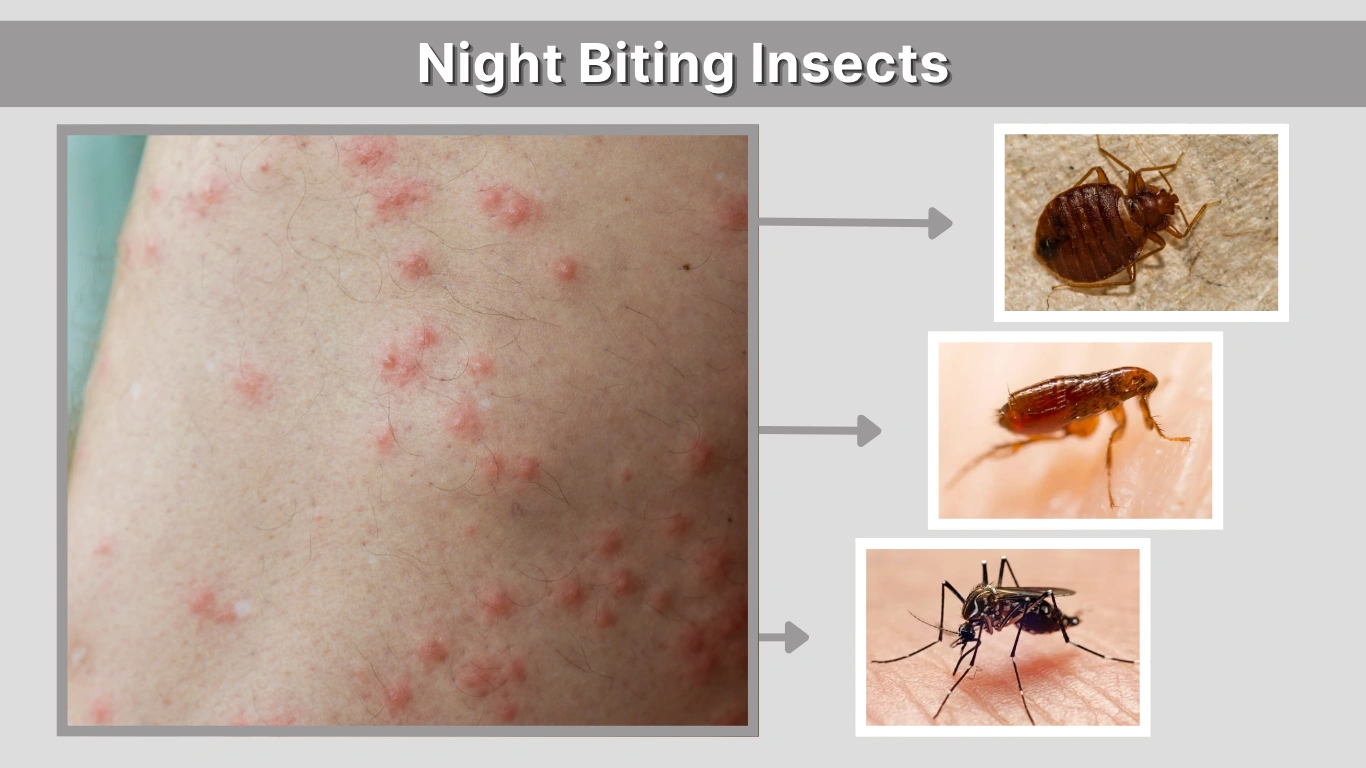
Night biting insects are a common nuisance that can turn restful sleep into an itchy nightmare. These unseen pests thrive in dark, warm environments and can bite humans without being noticed. Understanding which insects bite at night, how to identify them, and how to prevent infestations helps protect your health and comfort. This guide covers the most common night biters, their habits, and proven solutions for keeping them away.
Common Night Biting Insects

Bed Bugs
Bed bugs are among the most infamous night biters. Small and reddish-brown, these insects feed on human blood while people sleep. Their bites usually appear in rows or clusters and cause red, itchy bumps. Bed bugs hide in mattress seams, furniture joints, and cracks, making them difficult to spot. Despite not transmitting diseases, their bites can lead to skin irritation and insomnia.
Mosquitoes
Mosquitoes are another common night predator. Attracted by carbon dioxide, heat, and body odor, they thrive in warm, humid environments. While their bites leave itchy welts, mosquitoes are also known for spreading serious diseases like malaria, dengue, and West Nile virus. Keeping windows screened and using repellents are crucial for nighttime protection.
Fleas
Fleas often infest homes with pets. These tiny, jumping insects feed on both animal and human blood. Their bites are small, red, and typically appear around ankles and legs. Even if your pet is the main host, fleas can spread to bedding and carpets, biting humans during the night. Regular grooming and vacuuming help control infestations.
Mites
Mites are microscopic arachnids that can cause itching and irritation, especially at night. Dust mites don’t bite but can trigger allergies. However, scabies mites burrow into the skin, causing an intensely itchy rash that worsens at night. Early diagnosis and treatment are vital to stop the spread.
Gnats and Midges
Although less common indoors, gnats and biting midges can enter homes through windows or vents. They are attracted to light and moisture, often biting exposed skin while you sleep. Their bites are small, painful, and may cause mild swelling or redness.
Identification and Bite Patterns

Visual Symptoms
Nighttime bites can vary depending on the insect. Bed bug bites appear in straight lines or clusters, while mosquito bites are larger and isolated. Flea bites are small and typically found on the lower body. Recognizing these differences can help identify the cause and guide treatment.
Physical Evidence
Finding evidence is key to identifying a night-biting insect. Look for tiny blood stains or dark spots on your sheets—common signs of bed bugs. Pet bedding or carpets may reveal flea dirt (black specks). If you notice crawling insects or discarded shells, you’re likely dealing with an infestation.
Timing of Bites
Most night-biting insects are active between midnight and dawn. If you wake up with new bites or itching, it’s a strong sign that pests are feeding while you sleep. Since many bites don’t hurt immediately, the reaction often appears hours later, making the source hard to detect.
Why Insects Bite at Night

Nighttime provides ideal feeding conditions for many insects. Humans are still, the environment is dark, and body heat attracts pests like mosquitoes and bed bugs. These insects rely on cues such as carbon dioxide and sweat to locate their hosts. Warm temperatures, clutter, and unwashed bedding further encourage infestations indoors.
Prevention and Control

Home Treatments
Maintaining cleanliness is the most effective defense against night biting insects. Start by vacuuming carpets, mattresses, and upholstered furniture regularly to remove eggs and larvae. Wash all bedding, curtains, and pet items in hot water at least once a week. Encase your mattress and pillows in protective covers to trap any existing pests. Also, seal cracks and crevices in walls or bed frames where insects may hide.
Natural Repellents
Natural repellents can help deter biting insects without harsh chemicals. Essential oils like lavender, eucalyptus, peppermint, and citronella are excellent options. Add a few drops to a diffuser or mix with water for a room spray. You can also rub diluted oils onto your skin before bedtime. Burning citronella candles or using herbal sachets near sleeping areas adds extra protection.
Professional Help
When infestations persist, it’s wise to seek professional pest control. Experts can identify the specific insect type and apply targeted treatments safely. They use advanced methods such as steam cleaning for bed bugs or insect growth regulators for fleas. Hiring professionals not only eliminates current pests but also prevents future outbreaks, ensuring long-term relief.
When to Seek Medical Attention
Not all insect bites are harmless. If you experience severe swelling, allergic reactions, or secondary infections, consult a healthcare provider. Persistent itching, blistering, or pain may signal an infection or allergic dermatitis. Additionally, mosquito bites can transmit diseases such as dengue or Zika virus, requiring immediate attention. Always monitor symptoms and avoid scratching to reduce infection risk.
FAQs
What could be biting me at night if I can’t see anything?
You might be dealing with tiny pests such as bed bugs, fleas, or mites. These insects often bite while you’re asleep and hide during the day. Check your bedding and furniture seams for dark spots, blood smears, or small insects to confirm their presence.
How can I tell if bed bugs are biting me?
Bed bug bites often appear in rows or small clusters on exposed skin, especially on arms or legs. Look for reddish-brown spots or exoskeletons near your mattress seams. Bed bugs are nocturnal, so bites usually appear overnight, often accompanied by mild swelling or itching.
Can mosquitoes bite indoors at night?
Yes, mosquitoes can easily enter through open doors or windows. Once inside, they remain active in warm, humid environments. To prevent bites, use window screens, apply insect repellent, and keep fans running to disrupt their flight patterns and feeding behavior.
Do mites bite humans while sleeping?
Some mites, like dust mites, don’t bite but cause allergic reactions. Others, such as scabies mites, burrow into the skin and create small, itchy rashes that worsen at night. If symptoms persist, medical treatment and thorough cleaning are necessary to eliminate them.
How do I stop night biting insects naturally?
Natural remedies include using essential oils like lavender or tea tree, keeping your room clean, and lowering humidity. Regular vacuuming and washing bedding in hot water can destroy eggs and larvae. You can also install bed covers and window screens for added protection.